&geometry(249x85) "Vet Cross")

Greasy Heel in Horses (Mud Fever): Causes, Signs & Treatment
Greasy heel, also known as mud fever or pastern dermatitis, is a common skin condition affecting horses, particularly during wet weather.
It typically affects the lower legs and can range from mild scabbing to painful, infected skin that may cause lameness.
What Causes Greasy Heel?
Greasy heel is usually caused by bacteria that thrive in wet, muddy conditions, although fungi, mites, and environmental factors can also contribute.
The condition often develops when:
- Horses are exposed to prolonged moisture
- Skin becomes softened and damaged
- Mud, bacteria, and debris penetrate the skin
Risk factors include:
- Wet paddocks or poor drainage
- Long hair around the pastern trapping moisture
- Poor hygiene or grooming
- Compromised skin barrier
Signs of Greasy Heel
- Scabs or crusty lesions on the lower leg
- Red, inflamed or moist skin
- Hair loss in affected areas
- Swelling of the lower limb
- Oozing discharge or "greasy" appearance
- Lameness in more severe cases
if left untreated, the condition can worsen and spread up the leg.
What Does Greasy Heel Look Like?
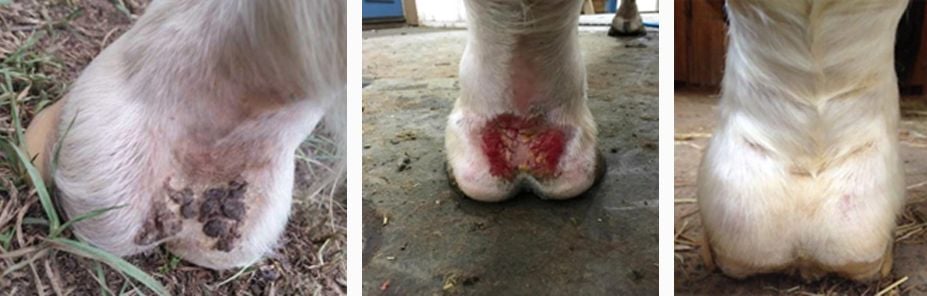
Greasy heel can look very different depending on how advanced it is.
Early/Mild Stage
- Small scabs or crusts
- Slight redness
- Minimal discomfort
Often easy to treat if caught early
Moderate Stage
- Thick scabs and crusting
- Hair loss
- Moist or irritated skin
- Some swelling
Requires more consistent cleaning and treatment
Severe Stage
- Painful, cracked or bleeding skin
- Significant swelling of the lower limb
- Oozing discharge
- Lameness
Veterinary treatment is usually required
Healing Stage
- Scabs resolving
- Skin drying and improving
- hair slowly regrowing
Continue management to prevent recurrence
Treatment of Greasy Heel
Treatment depends on severity, but early management is key.
For mild cases:
- Gently clean the area with an antiseptic wash
- Remove mud and soften scabs gradually
- Thoroughly dry the area
- Apply topical treatments
For more severe cases:
- Veterinary treatment may be required
- Antibiotics and anti-inflammatories may be needed
- Pain relief may be necessary
Thorough cleaning and keeping the area dry are critical for recovery. Click here to read the quick treatment checklist.
Management & Prevention
Prevention focuses on reducing moisture and protecting the skin:
- Keep horses in dry areas where possible
- Improve paddock drainage
- Regularly clean and dry legs
- Clip excess hair around the pastern
- Avoid prolonged exposure to mud
Managing the environment is one of the most effective ways to prevent recurrence.
When to Call the Vet
Contact Vet Cross if:
- The skin is cracked, bleeding, or very painful
- Your horse is lame
- The condition is spreading
- There is no improvement with basic treatment
- You are unsure of the diagnosis
Early treatment helps prevent more severe infection and long-term damage.
Final Thoughts
Greasy heel is a common but manageable condition. With early recognition, proper treatment, and good management practices, most horses recover well.
If you are unsure or the condition is not improving, the team at Vet Cross is here to help.