&geometry(249x85) "Vet Cross")

Wounds and Lacerations in Horses | First Aid & Treatment Guide
Horses are unfortunately very good at injuring themselves. Wounds and lacerations can occur in the paddock, stable, or during exercise - ranging from minor cuts to serious injuries involving joints, tendons, or bone.
While some wounds are straightforward, others can become serious very quickly. Early and appropriate treatment is key to achieving the best outcome.
First Aid for Wounds
The main goals of first aid are to:
- Stop bleeding
- Clean the wound
- Protect the area
- Reduce swelling
What to do immediately:
Apply pressure if bleeding
Use a clean towel or bandage to control bleeding
Cold hose the wound
This helps remove debris, reduce swelling, and slow bleeding
Keep your horse calm and in a clean area
Movement can worsen the injury
Apply a bandage if possible
Particularly for lower limb wounds to reduce swelling
When to Call the Vet (Very Important)
Contact Vet Cross immediately if:
- The wound is deep or large
- Bleeding is excessive or pulsing
- The wound is near a joint or tendon
- Your horse is lame
- There is swelling or heat
- You are unsure how serious it is
Even small puncture wounds can be more serious than they appear, particularly if they involve joints or deeper structures.
Cleaning and Managing Minor Wounds
For minor wounds:
- Gently clean with saline or clean water
- Remove dirt and debris
- Dry the area
- Apply a topical antiseptic
- Monitor daily
Avoid over-scrubbing, as this can damage healthy tissue.
Veterinary Treatment
Your veterinarian may:
- Clip and thoroughly clean the wound
- Remove damaged tissue
- Stitch the wound (if appropriate)
- Bandage or cast the area
- Prescribe antibiotics and anti-inflammatories
Early treatment improves healing and reduces complications such as infection or proud flesh.
Why Leg Wounds Need Extra Care
Wounds on the lower limbs can be more difficult to manage because:
- There is less soft tissue covering important structures
- Movement slows healing
- They are prone to swelling and “proud flesh”
Bandaging and careful management are especially important in these cases.
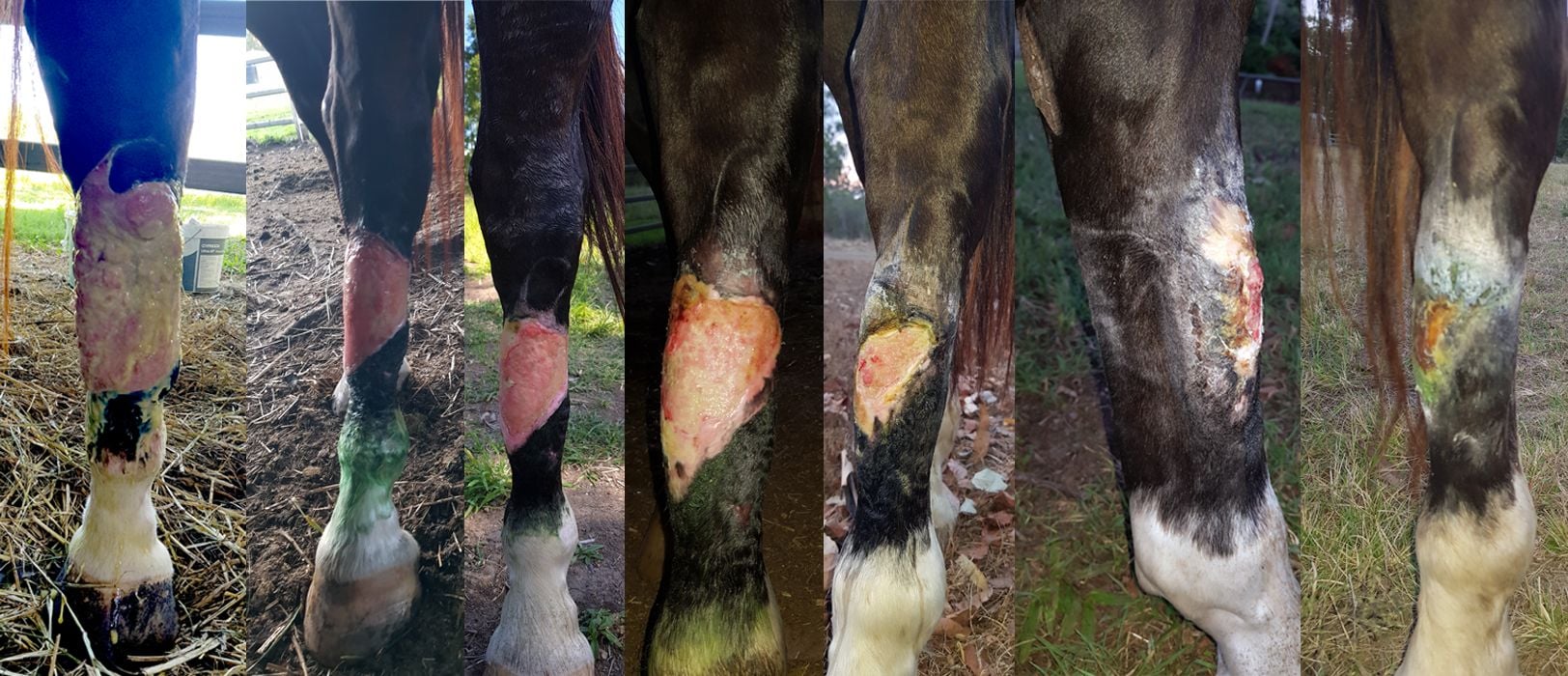
Complications to Watch For
If not managed properly, wounds can lead to:
- Infection
- Proud flesh (excess granulation tissue)
- Delayed healing
- Joint infections (serious emergency)
- Long-term lameness
Tetanus Risk
All wounds carry a risk of tetanus infection.
- Horses should be up to date with tetanus vaccination
- Boosters are often required following injury
Like to read more about Tetanus disease and how to help prevent it, Click Here.
Aftercare and Recovery
Recovery will depend on:
- Location of wound
- Depth and severity
- Structures involved
Your vet may recommend:
- Bandage changes
- Restricted movement
- Ongoing monitoring
Final Thoughts
Some wounds are simple - others are far more serious than they first appear.
When in doubt, it's always safer to have a wound assessed early. Prompt treatment can significantly improve healing and reduce long-term complications.
Vet Cross offers 24-Hour emergency care, so if you are unsure, don't hesitate to contact us.