&geometry(249x85) "Vet Cross")

Big Head in Horses: Causes, Signs & Prevention
Big Head is a nutritional disease that can affect horses grazing certain tropical and warm-season grasses. Despite its name, the first signs aren't always an obviously enlarged head. Horses may initially show general soreness, shifting lameness, poor condition or changes in their behaviour.
The condition is also known as Nutritional Secondary Hyperparathyroidism (NSH) or fibrous osteodystrophy. It occurs when a horse does not have enough available calcium in its diet over a prolonged period, causing the body to take calcium from the bones to maintain normal calcium levels in the blood.
For horse owners in Queensland, understanding the relationship between pasture, oxalates and calcium is particularly important.
What causes Big Head in horses?
Horses need calcium for healthy bones, teeth, muscles and many other normal body functions. Their bodies work hard to keep the amount of calcium in the blood within a very narrow range.
Some tropical grasses contain naturally occurring compounds called oxalates. Oxalates can bind to calcium in the digestive tract, making that calcium unavailable for the horse to absorb.
If a horse continues to consume a diet that provides insufficient available calcium, the body begins to draw calcium from the bones. Over time, this can cause the bones to become weakened and can lead to the characteristic changes associated with Big Head.
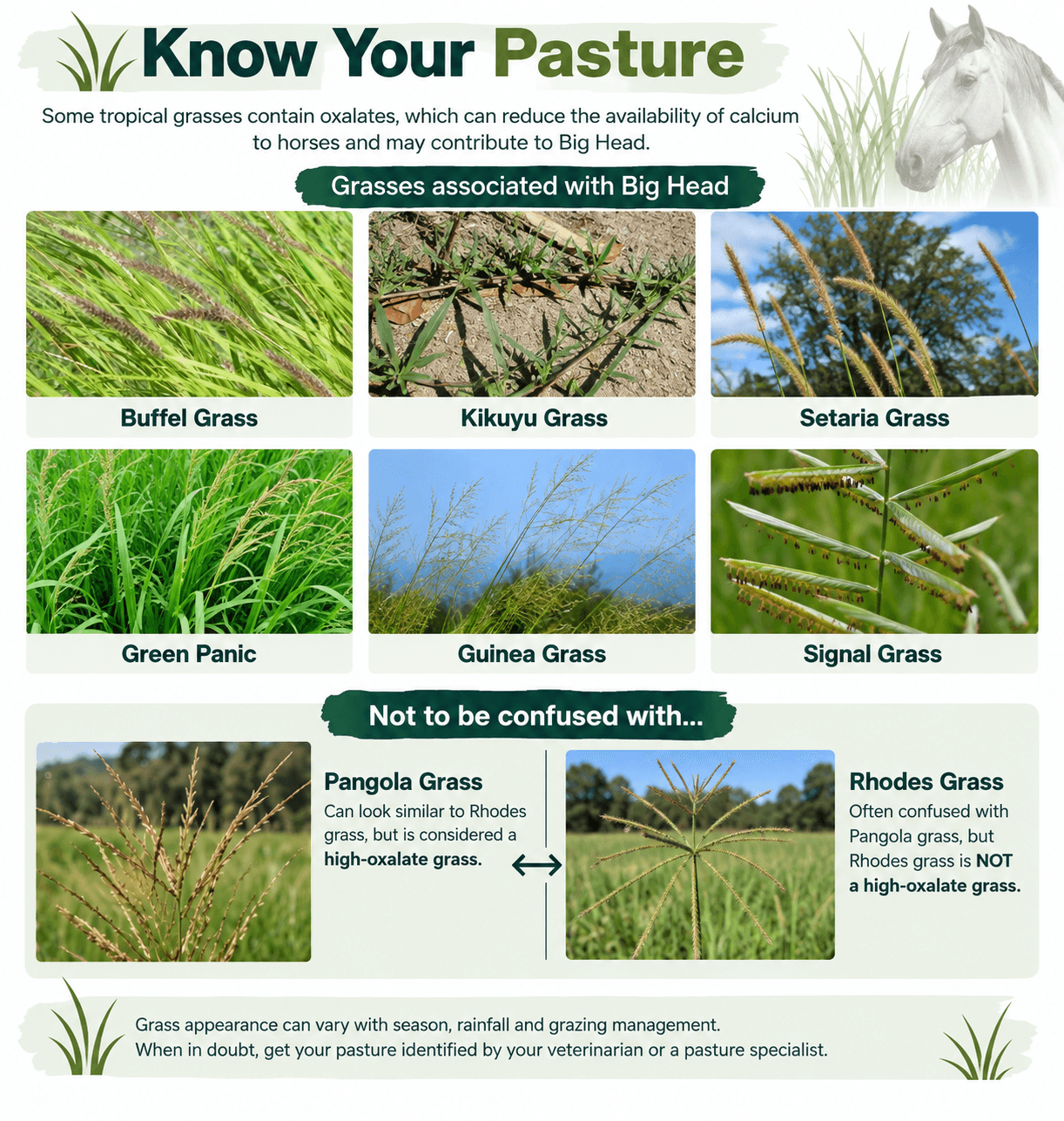
Which grasses can cause Big Head?
Big Head is often associated with Buffel Grass, but it isn't the only pasture that can contribute to the condition.
High-oxalate grasses that may pose a risk to horses include:
- Buffel grass
- Kikuyu grass
- Setaria
- Green panic and other panic grasses
- Guinea grass
- Pangola grass
- Signal grass
- Para grass
- Purple pigeon grass
The level of oxalates can vary depending on the grass species and growing conditions. Some of these grasses are common in Queensland, making pasture management an important part of preventing nutritional problems in horses.
What are the signs of Big Head?
The name "Big Head" comes from the swelling and enlargement of the facial bones that can occur as the disease progresses. However, an obviously swollen head isn't always the first or most noticeable sign.
Early or less obvious signs can include:
- General soreness or stiffness
- Shifting or unexplained lameness
- Reluctance to move
- Sensitivity when touched
- Poor body condition or weight loss
- A rough or unhealthy-looking coat
- Poor hoof health
- Difficulty eating or chewing
- Swelling or enlargement of the bones of the face or jaw
- Noisy breathing, particularly during exercise
As the disease progresses, changes to the facial bones can become more obvious. Severe cases can result in significant bone weakening and an increased risk of fractures.
Why does the horse's head become enlarged?
When calcium levels in the diet are inadequate, the horse's body responds by releasing parathyroid hormone. This helps maintain blood calcium levels by encouraging calcium to be taken from the bones.
With ongoing calcium deficiency, normal bone tissue can be replaced by fibrous connective tissue. The facial bones are particularly noticeable when this happens, resulting in the characteristic swollen or enlarged appearance known as "Big Head".
The changes are not simply cosmetic — they indicate significant changes to the horse's skeletal system.
Can Big Head occur without an obviously swollen head?
Yes.
A horse does not necessarily need to have a visibly enlarged head to have a calcium imbalance or developing nutritional secondary hyperparathyroidism.
Early signs such as shifting lameness, soreness, weight loss or reluctance to move can be easy to mistake for other conditions.
This is why unexplained lameness or changes in your horse's condition should always be investigated, particularly if the horse has been grazing a pasture containing high-oxalate grasses.
How can Big Head be prevented?
Pasture and diet management are the key to prevention.
Where possible, avoid relying on high-oxalate tropical grasses as the main source of forage. Providing a more varied pasture containing suitable low-oxalate grasses and legumes can help reduce the risk.
If high-oxalate pasture cannot be avoided, your horse's diet may need additional calcium to compensate for the reduced availability of calcium from the pasture.
However, simply adding a calcium supplement is not always the right solution. The horse's overall diet, calcium-to-phosphorus balance, forage and individual nutritional requirements should be considered.
A forage or pasture analysis can also be useful when there is uncertainty about the nutritional content of the horse's diet.
Practical ways to reduce the risk
- Know which grasses are growing in your paddocks.
- Avoid making high-oxalate grasses the sole or predominant source of forage where possible.
- Provide suitable alternative forage when necessary.
- Ensure the overall diet provides adequate calcium and phosphorus.
- Consider a good quality calcium supplement with the correct calcium form, ratio and bioavailability where appropriate, such as Jenquine Bone Formula Forte.
- Seek professional advice before making significant changes to your horse's diet.
What should I do if I think my horse has Big Head?
If you notice facial swelling, unexplained lameness, weight loss, soreness or changes in your horse's ability to eat, contact your veterinarian.
Your vet can assess your horse and consider their pasture, diet, clinical signs and overall health. Blood tests and other investigations may be recommended depending on the individual case.
It is important not to assume that every horse with a swollen face or lameness has Big Head. There are many other conditions that can cause similar signs, so a veterinary examination is important.
Can horses recover from Big Head?
Recovery depends on how advanced the condition is and whether the underlying nutritional problem can be corrected.
Once the horse is removed from the source of calcium deficiency and appropriate dietary and veterinary management is started, bone changes can take considerable time to improve. Recovery is not immediate, and severe cases may have permanent damage or complications.
Early recognition and prevention are therefore extremely important.
Talk to Vet Cross about your horse's health
If you're concerned about your horse's pasture, diet or signs that could be associated with Big Head, our veterinary team can help assess the situation and provide advice specific to your horse.
Don't wait for an obviously enlarged head before seeking advice. Early signs such as unexplained lameness, soreness, weight loss or changes in your horse's condition deserve attention.
Contact Vet Cross to arrange an appointment or discuss your horse's needs with our veterinary team.
Written by: Vet Cross marketing team
Clinically reviewed by: Dr Kate Schroeder BVSc (Hons) And Dr Andrew Marland BVSc (Hons)
Last reviewed: September 2026