&geometry(249x85) "Vet Cross")

Cattle Pregnancy Testing: A Valuable Tool For Beef Herd Management
Pregnancy testing is an important part of reproductive management in a beef breeding herd. Knowing which females are pregnant, which are empty and, where appropriate ,the approximate stage of pregnancy gives producers valuable information for making decisions about herd management, nutrition and future breeding.
At Vet Cross, our large animal veterinarians provide on-farm cattle pregnancy testing for producers throughout the Bundaberg, Gin Gin and surrounding region.
Why is Cattle Pregnancy Testing Important?
A productive breeding herd depends on getting as many females as possible pregnant within the desired joining period. Pregnancy testing provides a snapshot of reproductive performance and helps producers make informed decisions about individual animals and the herd as a whole.
An empty cow may continue consuming valuable pasture and supplements while contributing no calf to the next drop. Identifying empty females early gives producers the opportunity to make timely decisions about their management, including whether they should remain in the breeding herd.
Pregnancy testing can help producers:
- Identify pregnant and non-pregnant females
- Identify cows that have failed to conceive
- Monitor reproductive performance
- Plan nutrition management
- Make informed culling decisions
- Identify potential reproductive problems
- Estimate the timing of calving within the herd
- Improve planning of the upcoming calving season
Identify Empty Cows Early
One of the major benefits of pregnancy testing is identifying females that have not conceived.
An empty female still requires pasture, water and potentially supplementation and preventative health treatments, but will not produce a calf in the coming season.
Finding empty cows early allows producers to make decisions while they still have options. Depending on the individual animal and the goals of the enterprise, this may include culling, investigating possible reproductive problems or reviewing the herd's breeding management.
MLA recommends using pregnancy diagnosis to identify non-pregnant females and assess the reasons for reproductive failure, helping make better management decisions in the future breeding seasons.
Improve Reproductive Management
Pregnancy testing isn't simply about finding out whether a cow is pregnant. The results can provide valuable information about how well the breeding program is performing.
If a large number of females are empty, or pregnancy rates are lower than expected, it may be worth investigating factors such as:
- Bull fertility and breeding soundness
- Joining management
- Body condition and nutrition
- Disease
- Calf management and the timing of return to oestrus
- Other reproductive issues within the herd
Identifying a problem early provides more opportunity to address it before next breeding season.
Plan Nutritional Management
Pregnancy status can also help producers make more informed decisions about nutritional management.
Pregnant females have different nutritional requirements throughout pregnancy, with nutritional management becoming particularly important as pregnancy progresses.
Knowing the pregnancy status of females can help producers plan paddock allocation, supplementation and other nutritional strategies according to the needs of the herd.
This can be particularly useful when feed availability is limited or when producers are managing groups of cattle with different nutritional requirements.
When Should Cattle Be Pregnancy Tested?
The ideal timing of pregnancy testing depends on the type of cattle, the breeding system and the method being used.
MLA guidelines indicate that, for heifers, ultrasound can generally be used from around 28-35 days after last day of mating, while manual palpation is generally used for around 35-50 days. For cows with calves, ultrasound may be performed from around 30 days after the last day of mating, while manual palpation is generally recommended from around 50 days, or at weaning at the latest.
Your veterinarian can help determine the most appropriate timing for your herd based on your joining period and management system.
How is Cattle Pregnancy Testing Performed?
At Vet Cross, our large animal veterinarians use ultrasound to assist with cattle pregnancy diagnosis.
Ultrasound allows the veterinarian to examine the reproductive tract and identify pregnancy, including developing structures within the uterus. It can also provide useful information about the stage of pregnancy and help estimate foetal age when appropriate.
For producers, this means pregnancy testing can provide more than simply a "pregnant" or "not pregnant" result. The information gathered can help with planning for the calving season and making management decisions within the breeding herd.
Cattle are generally pregnancy tested through the crush or suitable cattle handling facilities on-farm, allowing the process to be carried out efficiently while maintaining appropriate animal handling and safety.
The timing of pregnancy testing is important. Your veterinarian can advise on the most appropriate time to test based on your joining period and the information you want from the examination.
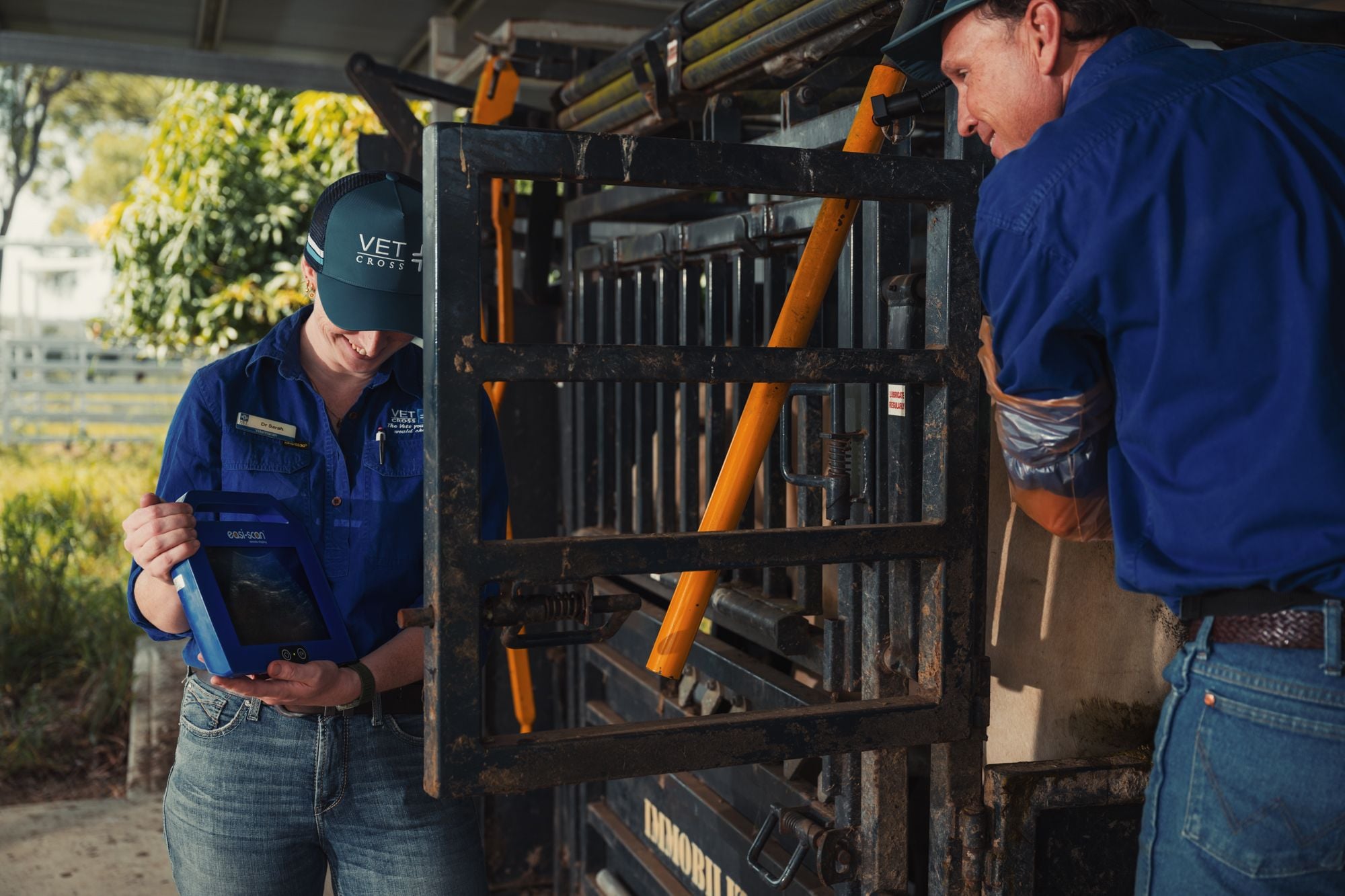
Pregnancy Testing Can Help With Calving Management
Knowing approximately when cows are due to calve can help producers better understand the expected spread of calving across the herd.
Estimating foetal age during pregnancy diagnosis can assist with planning for the calving period, including labour requirements and closer monitoring of cows expected to calve earlier.
For herds where joining periods are controlled, this information can also provide useful feedback on the reproductive performance of the herd.
What If Pregnancy Rates Are Lower Than Expected?
Pregnancy testing can sometimes reveal a bigger picture.
If more females are empty than expected, your veterinarian can help investigate possible causes. This may involve reviewing the breeding program, assessing bulls, considering nutrition and body condition, or investigating infectious or other reproductive diseases where appropriate.
A lower-than-expected pregnancy rate shouldn't simply be viewed as a number on a sheet. It can be an opportunity to identify where improvements could be made before the next breeding season.
Why Have Your Cattle Pregnancy Tested By a Veterinarian?
Pregnancy diagnosis is a skilled procedure, and having your herd assessed by an experienced cattle veterinarian provides an opportunity to combine pregnancy testing with broader herd reproductive and veterinary advice.
A veterinary visit can also provide an opportunity to discuss:
- Reproductive performance
- Bull fertility and breeding soundness
- Herd health
- vaccination programs
- Parasite management
- Nutrition and body condition
- Reproductive disease investigation
- Future breeding and herd management
Australian cattle industry resources emphasise the importance of competent pregnancy diagnosis as part of reproductive management and herd decision-making.
On-Farm Cattle Pregnancy Testing With Vet Cross
Our Vet Cross large animal veterinarians regularly work with cattle producers on-farm and understand the practical demands of managing a breeding herd.
We can provide cattle pregnancy testing on-farm, helping producers determine pregnancy status and use the results to make informed decisions about their herd.
If you're approaching the end of your joining period, or it's time to check the reproductive performance of your breeding herd, contact Vet Cross to arrange a suitable time for our large animal team to visit your property.
Want to know how your breeding herd is performing? Contact Vet Cross to arrange cattle pregnancy testing on-farm.
Written by: Vet Cross Marketing Team
Clinically reviewed by: Dr Andrew Marland BVSc (Hons)
Last reviewed: September 2026