&geometry(249x85) "Vet Cross")

Protecting Your Horse from Tetanus and Strangles: Why Vaccination Matters
Every horse owner hopes they'll never have to deal with a serious infectious disease - but unfortunately, tetanus and strangles are two conditions that can affect horses of any age.
While these diseases are very different, they have one thing in common: both can often be prevented through routine vaccination. At Vet Cross, we regularly recommend tetanus and strangles vaccination as part of a complete preventative healthcare plan to help keep horses healthy, whether they're competition horses, pleasure horses or simply enjoying retirement in the paddock.
Here's what every horse owner should know.
Why are vaccinations important for horses?
Vaccination is one of the most effective ways to protect horses from infectious diseases that can cause severe illness, long-term complications or even death. Routine vaccinations are tailored to each horse based on factors such as:
- Age
- Lifestyle
- Travel frequency
- Contact with other horses
- Existing medical conditions
- Local disease risks
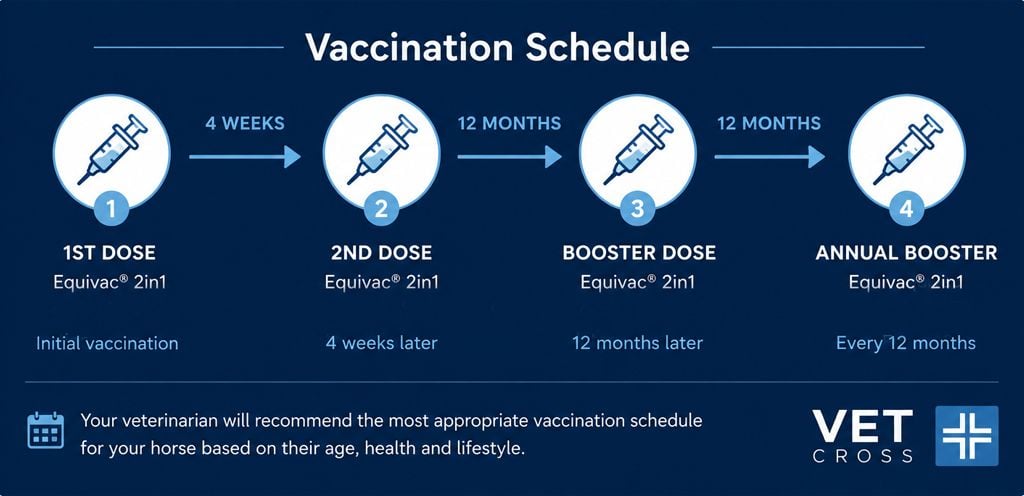
Your veterinarian can help determine the most appropriate vaccination schedule for your horse based on these individual risk factors.
Tetanus - A Silent Threat Found Almost Everywhere
Unlike many infectious diseases, your horse doesn't need to come into contact with another horse to develop tetanus.
The bacteria (Clostridium tetani) naturally live in soil, manure and dust throughout Australia. They enter the body through wounds - sometimes even tiny puncture wounds that are easy to miss. Once inside the body, the bacteria produce a powerful toxin that attacks the nervous system.
Because horses spend so much time outdoors and are naturally curious animals, they're particularly susceptible to cuts, puncture wounds and injuries that create an opportunity for infection.
Common ways horses are exposed include:
- Stepping on nails
- Barbed wire injuries
- Puncture wounds
- Surgical procedures
- Foaling injuries
- Dental eruption in young horses
Even horses that never leave their property remain at risk because tetanus bacteria are commonly found in the environment.
If you would like to read more about wound and laceration care click here.
Signs of Tetanus
Early signs can be subtle and are sometimes mistaken for colic or muscle soreness.
As the disease progresses, horses may develop:
- Muscle stiffness
- Difficulty chewing or swallowing
- Reluctance to move
- A stiff "sawhorse" stance
- Protrusion of the third eyelid
- Raised tail
- Flared nostrils
- Increased sensitivity to light, noise and touch
In advanced cases, muscle spasms become so severe that horses may collapse and eventually be unable to breath due to paralysis of the muscles. Unfortunately, tetanus is frequently fatal despite intensive treatment.
Strangles - One Sick Horse Can Affect Many
Strangles is very different from tetanus.
Instead of entering through wounds, strangles is a highly contagious bacterial infection caused by Streptococcus equi that spread easily between horses.
It is commonly transmitted through:
- Nose-to-nose contact
- Shared water troughs
- Feed buckets
- Tack
- Floats
- Grooming equipment
- Clothing and equipment handled by people
Some horses can carry the bacteria without appearing sick, unknowingly spreading the disease to others.
Signs of Strangles
Horses with strangles often develop:
- Fever
- Depression
- Loss of appetite
- Thick yellow nasal discharge
- Swollen lymph nodes beneath the jaw
- Painful abscesses around the throat
- Difficulty swallowing
- Difficulty breathing
Because the disease spreads so readily, outbreaks can occur rapidly on agistment properties, breeding farms, riding schools and competitive venues.
Which Horses Should Be Vaccinated?
While every horse benefits from tetanus protection, vaccination against strangles is especially important for horses that:
- Attend competitions or pony club
- Travel regularly
- Live at agistment properties
- Breed or mix with new horses
- Frequently come into contact with horses from other properties
Many owners choose the convenient Equivac® 2 in 1 vaccine, which provides protection against both tetanus and strangles. Horses receiving their first vaccination require and initial course before moving onto regular booster vaccinations to maintain immunity.
What Happens If My Horse Gets Injured?
One of the most common questions we hear is:
"My horse stepped on something sharp - what should I do?"
Contact your veterinarian as soon as possible.
Even vaccinated horses may require a booster depending on:
- When they last received a tetanus vaccination
- The nature of the wound
- Whether the injury is fresh or several days old
For horses with an unknown or incomplete vaccination history, tetanus antitoxin may also be recommended to provide immediate short-erm protection while vaccination take effect.
Prevention Is Always Better Than Treatment
Both tetanus and strangles have the potential to become serious medical emergencies.
The good news is that routine vaccination dramatically reduces the risk of these diseases and forms an important part of your horse's annual preventative healthcare.
A Vet Cross, we recommend combining vaccinations with regular health examinations, Hendra vaccination, dental care, and parasite control to help your horse stay healthy throughout every stage of life.
Book Your Horse's Annual Health Check
Whether your horse is overdue for vaccination or you're unsure which vaccines are appropriate, our experienced equine veterinarians are happy to help.
We can tailor a vaccination program based on your horse's lifestyle, travel and individual health needs, giving you peace of mind that they're protected against preventable diseases.
To book an appointment, contact Vet Cross today.
Written by: Vet Cross Marketing Team
Clinically reviewed by: Dr Amy Cox BVSc (Hons)
Last reviewed: July 2026